
Simulation and Data Lab – Human–Computer Interaction
Major Competencies
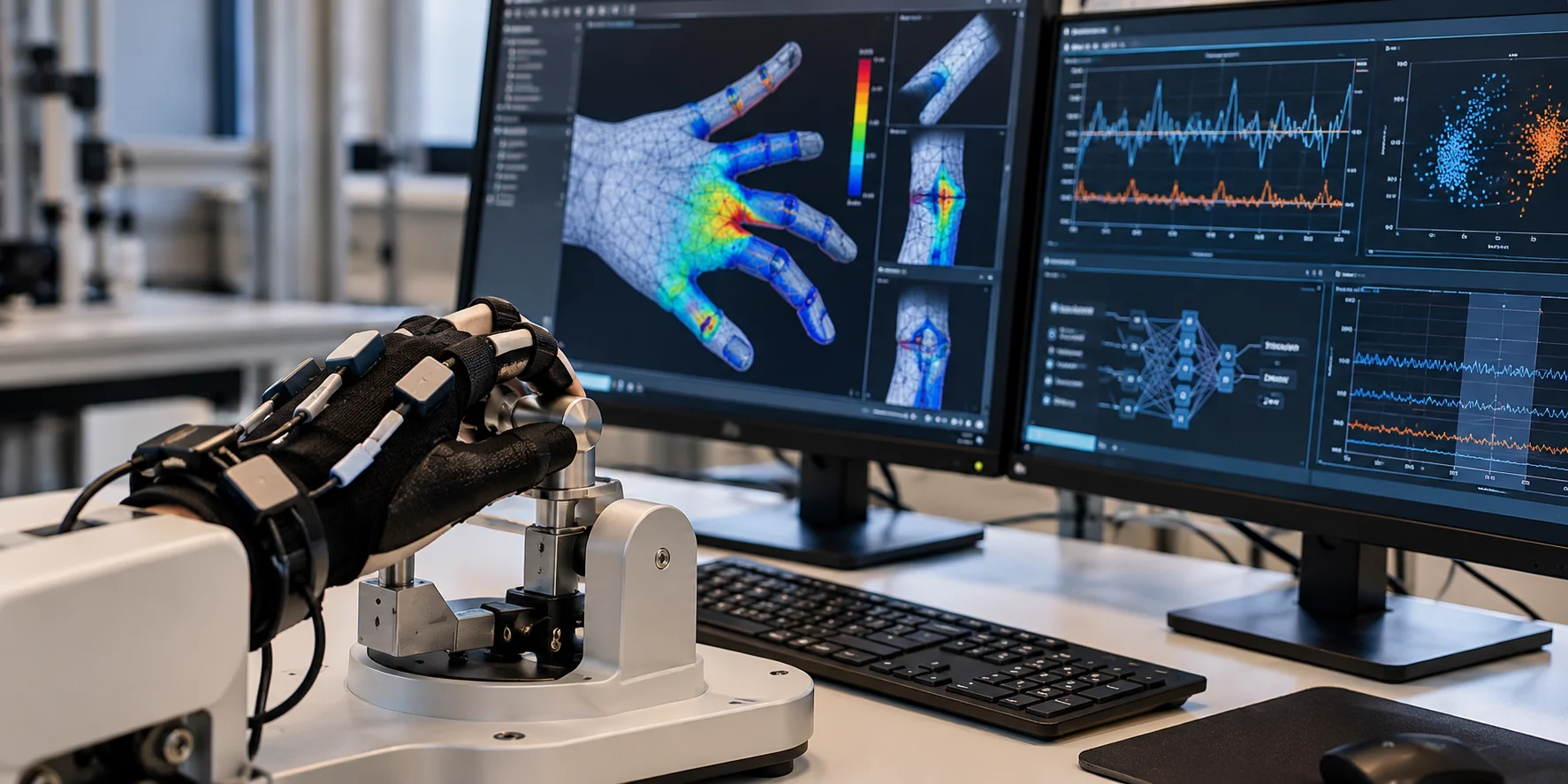
The Human–Computer Interaction (HCI) Lab advances next-generation human-centered technologies through interdisciplinary research integrating artificial intelligence (AI), Finite Element Modeling (FEM), physics-based simulation, and human-subject experimentation. The lab explores innovative computational and experimental methodologies, including simulation-augmented approaches and synthetic data generation, to deepen the understanding of human perception and interaction while extending the boundaries of conventional research. With a strong commitment to scientific discovery, technological innovation, and real-world implementation, the lab aims to advance intelligent, adaptive, and personalized solutions with transformative applications in healthcare, rehabilitation, haptics, wearable systems, and assistive technologies.
Human–Computer Interaction and Intelligent Wearable Technologies
Advancing the frontiers of human–computer interaction through interdisciplinary research in human perception, intelligent interfaces, and emerging wearable technologies. This area explores innovative approaches to understanding and enhancing human–technology interaction, emphasizing adaptive, personalized, and accessible systems. Research bridges fundamental scientific investigation and practical technological innovation, with transformative potential across healthcare, rehabilitation, assistive technologies, and immersive environments.
Finite Element Modeling and Physics-Based Simulation
Pioneering advanced computational modeling and physics-based simulation to investigate complex physical systems and human–technology interactions. This area focuses on developing innovative numerical and simulation-driven methodologies that expand scientific understanding, address conventional experimental limitations, and enable new possibilities in computational engineering and interdisciplinary research. Emphasis is placed on scientific rigor, computational innovation, and real-world applications.
Artificial Intelligence and Synthetic Data Generation
Exploring the next generation of artificial intelligence through advanced computational approaches, simulation-augmented methodologies, and synthetic data generation. This area investigates emerging AI-driven approaches to address complex scientific challenges, extend the capabilities of conventional experimentation, and advance intelligent analysis and optimization. The research emphasizes reliable, adaptive, and scientifically grounded computational frameworks with broad interdisciplinary applications.
Lab news and events
People
Dr. Nashmin Yeganeh
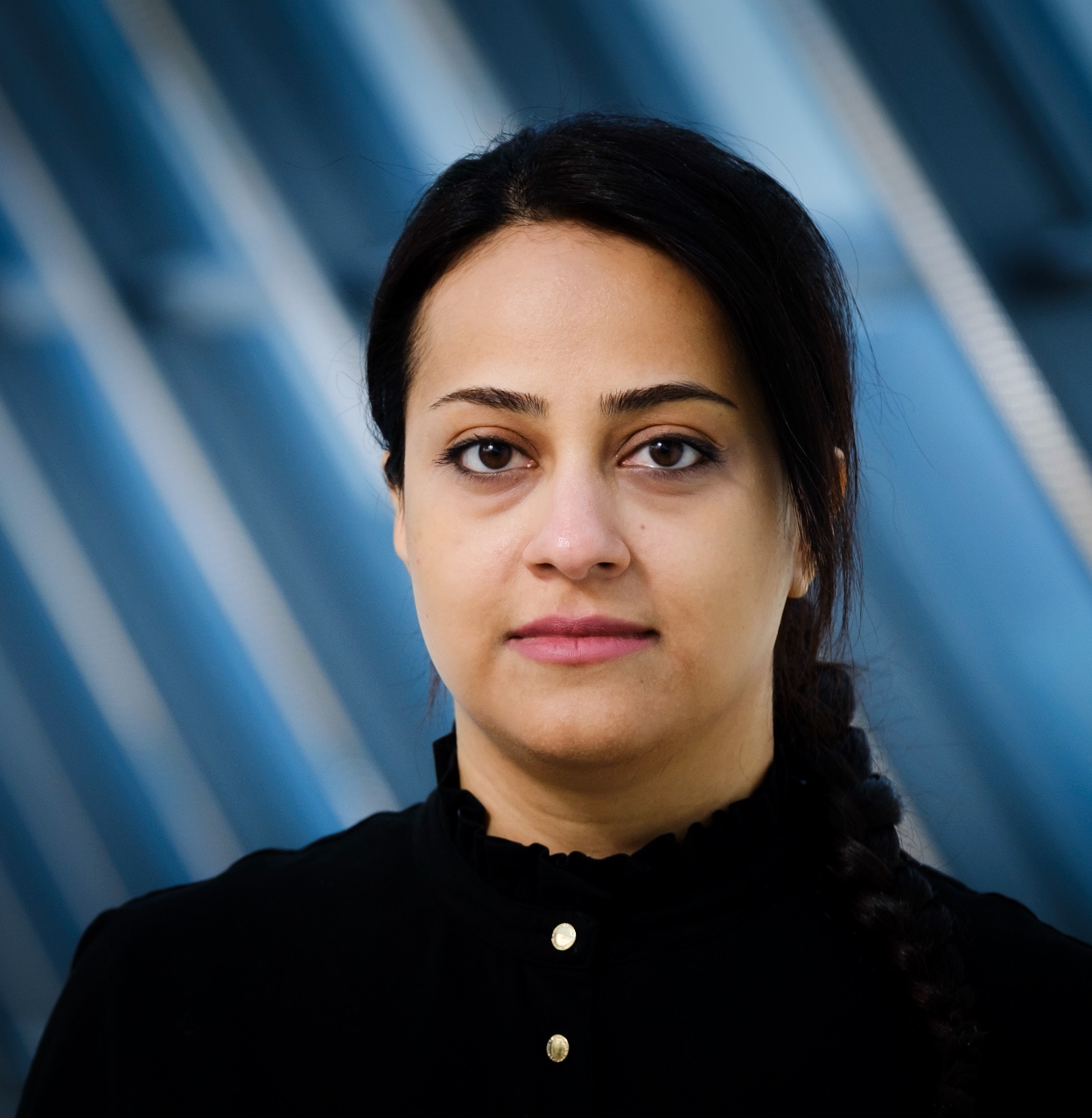
Dr. Nashmin Yeganeh is a researcher specializing in human–computer interaction (HCI), haptics, wearable systems, human-centred design, and assistive technologies for people with sensory impairments. She holds BSc and MSc degrees in Mechanical Engineering and a PhD in Industrial Engineering, specializing in human–computer interaction, from the Faculty of Industrial Engineering, Mechanical Engineering and Computer Science at the University of Iceland. Her doctoral research combined experimental psychophysics, human-centred design, and empirical user studies to design, develop, and evaluate VibroSleeve, a wearable vibrotactile device for forearm stimulation. Her research examines human sensory perception, tactile information processing, and individual differences, with the aim of advancing accessible interaction and intelligent assistive technologies. Her work contributes to adaptive haptic interfaces, sensory substitution systems, and wearable technologies that improve sensory accessibility, support human capabilities, and make interaction with technology more inclusive.
Dr. Reza Hassanian
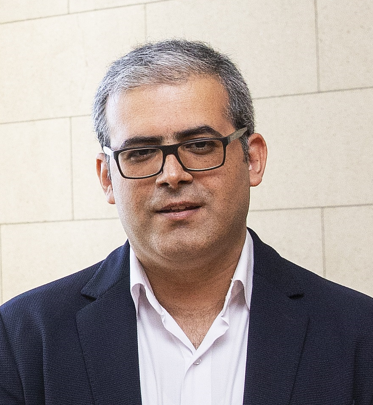
Dr. Reza Hassanian received his PhD in Computational Engineering from the University of Iceland. He holds BSc and MSc degrees in Mechanical Engineering and a second master's degree in Sustainable Energy Engineering from Reykjavik University. He is the Head of the Simulation and Data Lab, specializing in Computational Fluid Dynamics. He is a Senior Member of IEEE and a member of APS, EPS, and EUROMECH.
Since 2020, he has actively contributed to European Commission-funded projects, including Co-RAISE, EuroCC 1/2/3, EDIH 1.0/2.0, and the COST Actions SCALES and CIPHER. He is the Principal Investigator (PI) of DL4PL, a project developing physics-informed AI for complex systems, and serves as PI or co-PI on multiple research projects utilizing the LUMI high-performance computing (HPC) system. He also serves on scientific committees for international conferences and national events, including Hackathon 2025/2026, focused on developing agentic AI systems.
His research interests include renewable energy, Computational Fluid Dynamics, artificial intelligence, high-performance computing, and turbulent flows. His work combines applied AI for engineering applications with fundamental research in fluid mechanics and energy production.
Alongside his research, he teaches university courses in energy systems, AI, HPC, and fluid dynamics. He regularly presents his research findings and developments at international conferences and scientific meetings.

Dr. Chadi Barakat
Chadi Barakat received his PhD in Bioengineering from the School of Engineering and Natural Sciences of the University of Iceland. He is a member of the Research Group AI and ML for Healthcare and the Center for Advanced Simulation and Analytics (CASA) Simulation Data Lab for Healthcare at the Juelich Supercomputing Centre of Forschungszentrum Juelich in Germany. He completed his B.Sc. in Computer and Communications Engineering at the American University of Science and Technology – Beirut, Lebanon and received his M.Sc. in Bioengineering from the University of Iceland.
His PhD work revolved around the application of Machine Learning and Deep Learning in medical applications, specifically in the diagnosis and treatment of Acute Respiratory Distress Syndrome (ARDS), and is currently making HPC-accelerated AI solutions available to industry partners in the Smart Data Innovation Services project.

Dr. Delphine Chadefaux
Dr. Delphine Chadefaux has been an Associate Professor in biomechanics at Sorbonne Paris North University (USPN) since 2018, where she conducts her research at the Georges Charpak Human Biomechanics Institute. She obtained her PhD in engineering sciences, specializing in acoustics, from Sorbonne University in 2012, and her Habilitation to Direct Research (HDR) from USPN in 2026. Her research focuses on human exposure to shocks and vibrations, particularly in sports and disability contexts. She also investigates musician–instrument interaction, exploring the relationships between posture, movement, and musical expressiveness. She has co-supervised seven PhD students, published 30 peer-reviewed articles, and participated in more than 30 international conferences.
Projects & Cooperations
All IHPC ProjectsSelected Publications
Journal Articles
Yeganeh, N., Makarov, I., Unnthorsson, R., & Kristjánsson, Á. (2026). Assessing Spatial and Spatiotemporal Tactile Working Memory Using Adaptive Staircase Procedures. Sensors, 26(8), 2361. DOI: 10.3390/s26082361
Yeganeh, N., Makarov, I., Kristjánsson, Á., & Unnthorsson, R. (2025). Vibrotactile Pattern Recognition: Influence of Interstimulus Intervals. Virtual Reality & Intelligent Hardware, 7(5), 483–500. DOI: 10.1016/j.vrih.2025.06.001
Karimi, M., Yeganeh, N., Makarov, I., et al. (2025). Haptic Feedback Systems for Lower-Limb Prosthetic Applications: A Review of System Design, User Experience, and Clinical Insights. Bioengineering, 12(9), 989. DOI: 10.3390/bioengineering12090989
Yeganeh, N., Makarov, I., Kristjánsson, Á., & Unnthorsson, R. (2024). Discrimination Accuracy of Sequential Versus Simultaneous Vibrotactile Stimulation on the Forearm. Applied Sciences, 14(1), 43. DOI: 10.3390/app14010043
Yeganeh, N., Makarov, I., Stefánsson Thors, S. S., Kristjánsson, Á., & Unnthorsson, R. (2023). Evaluating the Optimum Distance Between Voice Coil Actuators Using the Relative Point Localization Method on the Forearm. Actuators, 12(1), 6. DOI: 10.3390/act12010006
Yeganeh, N., Makarov, I., Unnthorsson, R., & Kristjánsson, Á. (2023). Effects of Stimulus Frequency and Location on Vibrotactile Discrimination Performance Using Voice Coil Actuators on the Forearm. Actuators, 12(6), 224. DOI: 10.3390/act12060224
Makarov, I., Stefánsson Thors, S. S., Ævarsson, E. A., Jörgensson, F. K. P., Yeganeh, N., Kristjánsson, Á., & Unnthorsson, R. (2023). Amplitude Changes Cause the Haptic Intensity Order Illusion. ACM Transactions on Applied Perception, 21(1), Article 4. DOI: 10.1145/3626237
Peer-Reviewed Conference Proceedings
Yeganeh, N., Makarov, I., Kristjánsson, Á., & Unnthorsson, R. (2023). Discrimination of Vibrotactile Stimuli: Effects of Frequency Variation. Proceedings of ASME IMECE 2023. DOI: 10.1115/IMECE2023-112457
Yeganeh, N., Makarov, I., Stefánsson Thors, S. S., Ásgeirsson, H., Kristjánsson, Á., & Unnthorsson, R. (2022). Vibrotactile Sleeve to Improve Music Enjoyment of Cochlear Implant Users. Proceedings of ASME IMECE 2022. DOI: 10.1115/IMECE2022-95591
Book Chapter
Kristjánsson, Á., Makarov, I., Yeganeh, N., & Unnthorsson, R. (2026). Sensory Substitution Through Vibrotactile Stimulation. In Mobility of Visually Impaired People. Springer. DOI: 10.1007/978-3-031-91550-5_8